SAVE OUR BEES!
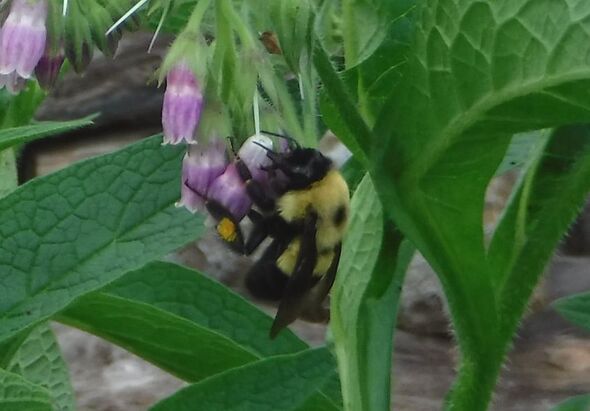
A verified sighting of a rusty patched queen in our yard (the queens don't have the rusty patch).
|
The Endangered
|
From Theresa & Bear
|
If you build it they will come… applies just as much to wildlife as baseball.
If you get rid of some or all of your lawn and replace it with plants that are beneficial to wildlife, you will get the joy of watching that wildlife. And you will often be amazed at what you see. Bear discovered the endangered rusty patched bumble bee (Bombus affinis) in our tiny yard while he was engaging in some citizen science for the Wisconsin Bumblebee Brigade (aka 3B). They are tracking observations of bumble bees across the state to learn more about their distribution and what might be needed for their conservation. Anyone can submit photos of bumble bees and get a verified ID. Taking the photos is no easy task. If you’ve watched how quickly bees fly from flower to flower you’ll know what the phrase, “As busy as a bee” means. With the bees spending just seconds at each flower, it is difficult to get a photo that is in focus and shows the right angles to ID the bee. But Bear perseveres, frequently taking laps about our yard, going from flower patch to flower patch like a much larger bee, and using our point and shoot camera to see what he can get. (Bear here... To ID a bee for the 3B you need a good back shot with the wings open to see markings. I feel a little weird sometimes but I will keep following bees around saying "come on... show me the butt!) He was rewarded in June of 2021 with a verified ID of an endangered rusty patched queen. He has thus far found five species of bumble bee in our yarden. |
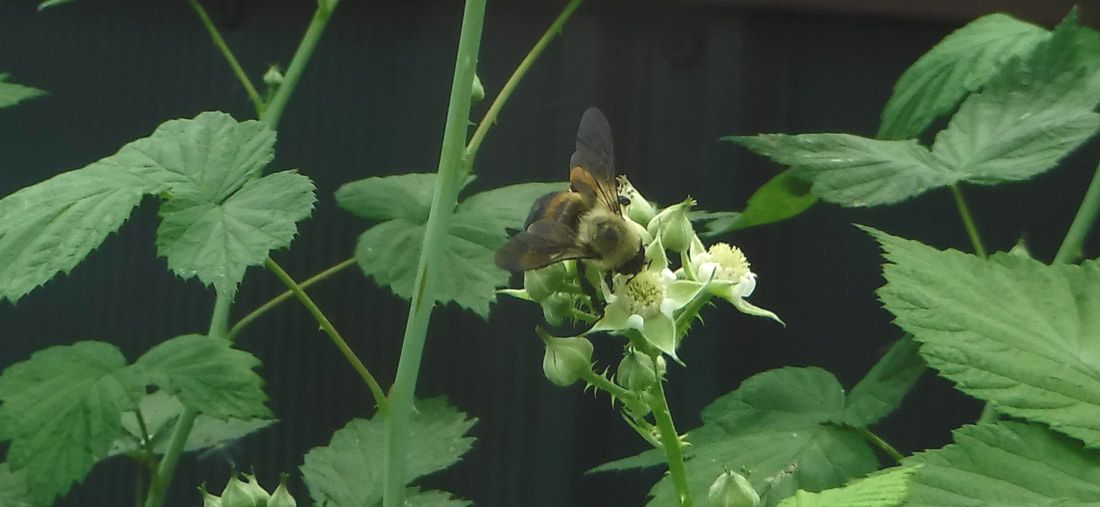
Do you think I'm happy to be here eating this wild raspberry...
Yes, I am. Here's a smile for you: 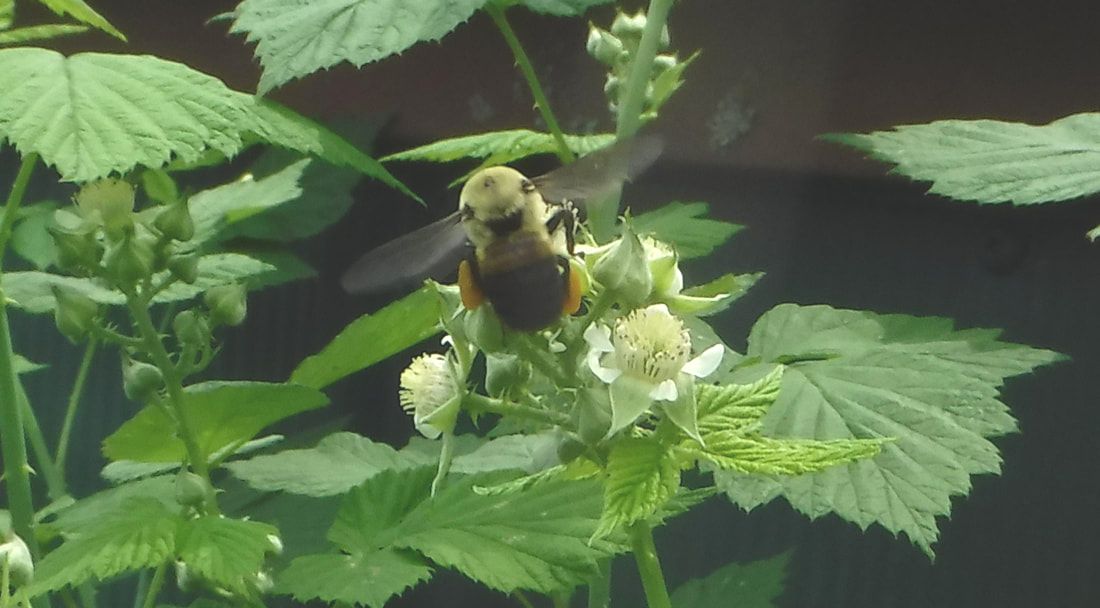
|
|
|
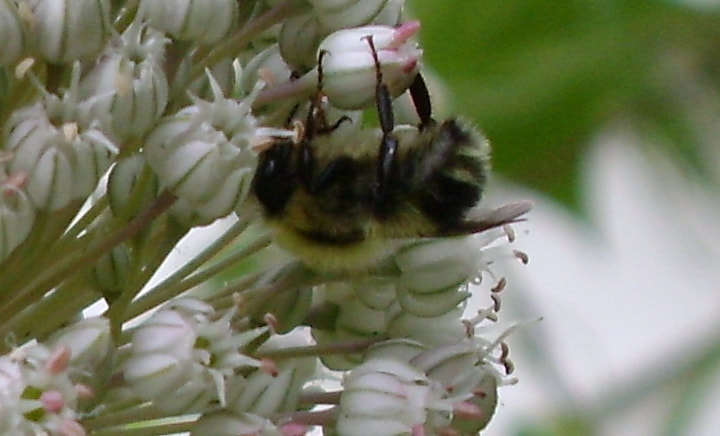
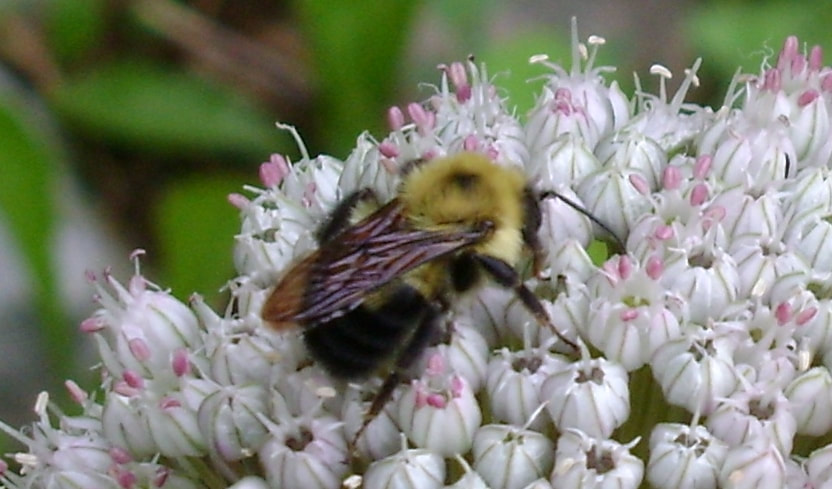
Why I trust 3B. I wasn't sure if these two shots were the same bee or not. 3B and got verified they were 2 different bees from 2 different species! The upside down one is a half-black and the other is a twospotted bee. - Bear
Why Help Bumble Bees?
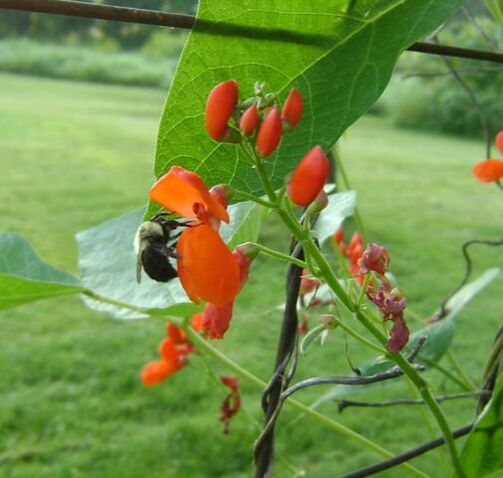
A bumble pollinating some scarlet runner beans.
|
Bumbles bees are the chief pollinators of many economically important crops, including blueberries, cranberries, clover, and tomatoes. I don’t know about you, but I don’t want to live without tomatoes. Native insects (mostly bees of all kinds) provide an estimated $3 billion dollars in pollination services per year in the US. While bees buzz from flower to flower they transfer the pollen that fertilizes the flowers so they can grow into fruit. Without them, we would not have enough to eat. If bees go away so too do many of our food crops and many of the wildflowers that support the insects, butterflies, birds, and other wildlife that eat their pollen and seeds and serve as the basis of the food chain.
As recently as the 1990s the rusty patched bumble bee was abundant across 28 states, but its population has since declined by 87%, which resulted in them being the first bumble bee to be added to the federal endangered species list in the USA, which happened in 2017. Multiple problems seem to be leading to their decline (and the decline of other bee species): disease, pesticides, climate change, habitat loss. Rusties are now only found in nine states and one Canadian province. They are expected to become extinct in many areas within a matter of years. |
Still not convinced that bumbles are worth saving? Maybe this short video of Bear petting a bumble will help.
To many, they look like flying teddy bears, and the urge to pet them is strong:
https://www.youtube.com/watch?v=PYOcVebrH_k
To many, they look like flying teddy bears, and the urge to pet them is strong:
https://www.youtube.com/watch?v=PYOcVebrH_k
How to Help Bumble Bees (and Other Native Pollinators)
We can help! What this sighting of an endangered bee at our house says to us is that individuals can make a difference even if you only have a tiny yard like ours (it’s 60 feet by 140 feet, less than 1/8th of an acre). Over the course of many years we have removed our lawn and replaced it with natives and edible plants. We’re so happy to know that creating even such a small habitat can be beneficial to wildlife. I can’t help but wonder, though, what would it be like if our neighbors joined the party and we had several yards in a row that had habitat instead of lawn? Maybe you can start a trend in your neighborhood!
We haven't convinced any of our neighbors to go with more natural yards, but Theresa did rather accidentally end up starting a garden club where we live that is devoted to planting natives in several spots around the village. The community loves seeing the flowers and the bees and insects appreciate the increased amount of food.
We haven't convinced any of our neighbors to go with more natural yards, but Theresa did rather accidentally end up starting a garden club where we live that is devoted to planting natives in several spots around the village. The community loves seeing the flowers and the bees and insects appreciate the increased amount of food.
Here are some things you can do to help bumble bees and other pollinators in your yard, wherever it is or whatever size it is:
1. Plant native flowers so that something is always in bloom:
|
Here's a list of the perennial flowers we have in our yard (Zone 5) that are often covered in bees. Most are natives. This is in roughly the order they bloom from Spring to Fall:
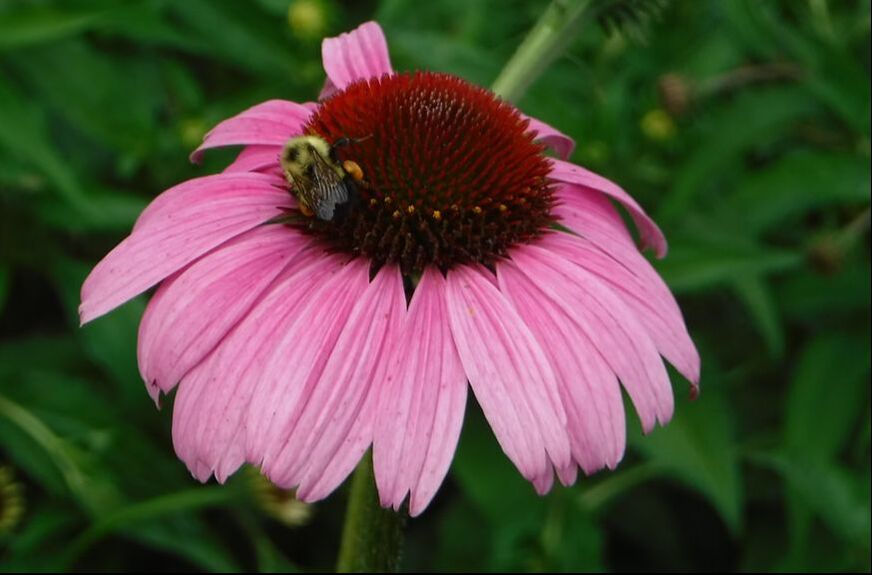
Bumble on purple coneflower.
|
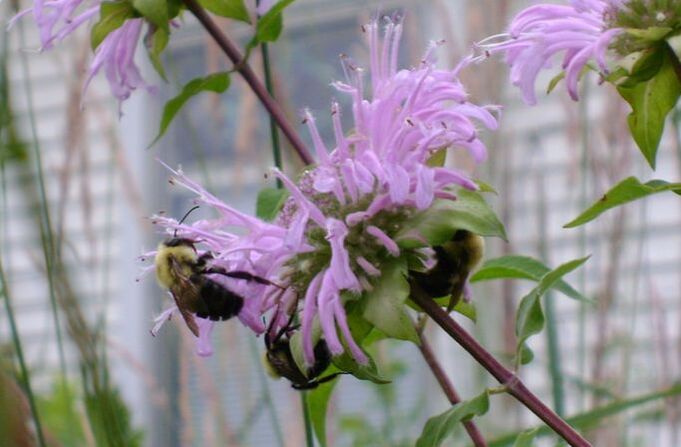
Three bumbles on a beebalm flower.
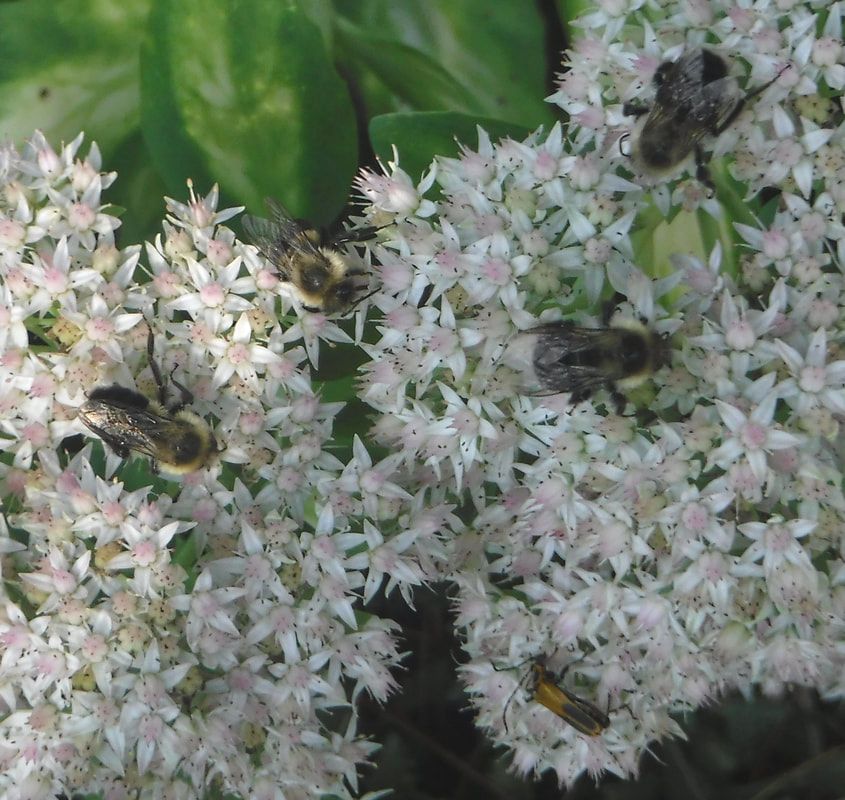
Yes, bees are social drinkers. (Bees on autumn stonecrop.)
|
There are also good online plant sources for bee-friendly yards if you google it for your area. Here are some books that can also help you figure out what plants might be good for your yard, as well as having lots of other ideas for backyard wildlife habitat (these are links for which we get a very small fee if you click on them):
  |
  |
  |
  |
  |
2. Don’t use pesticides or herbicides:
|
Pesticides can kill bees and herbicides can kill the plants they depend on for food.
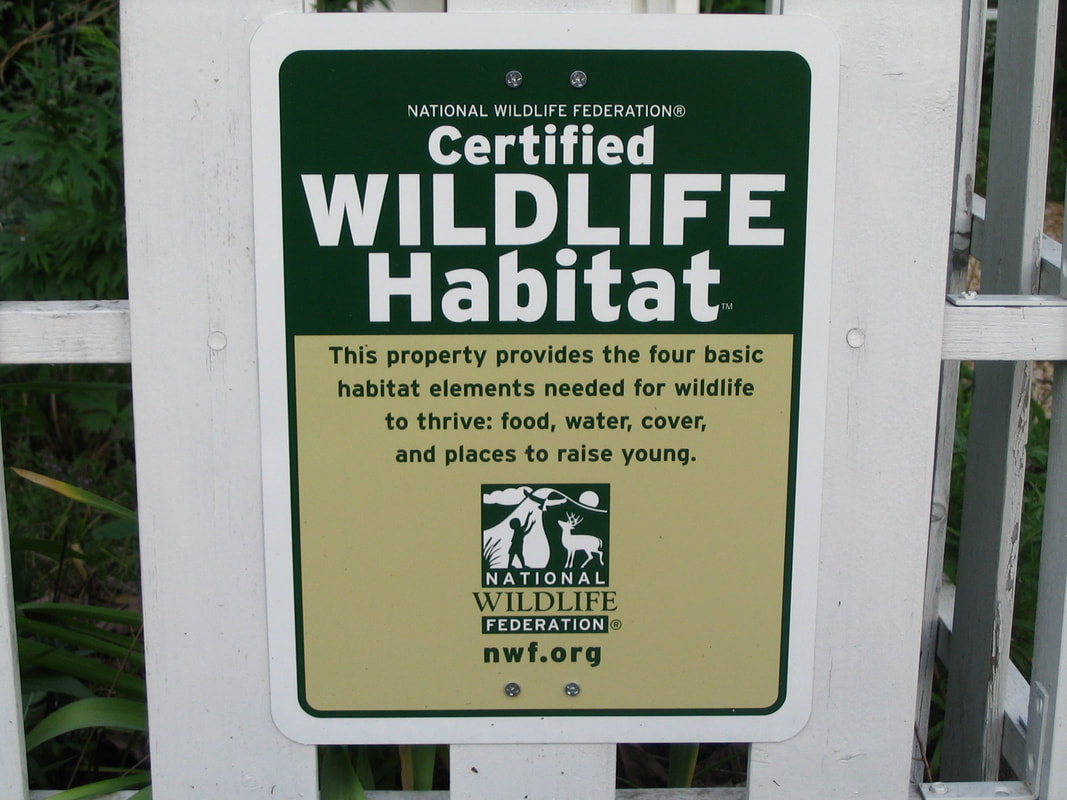
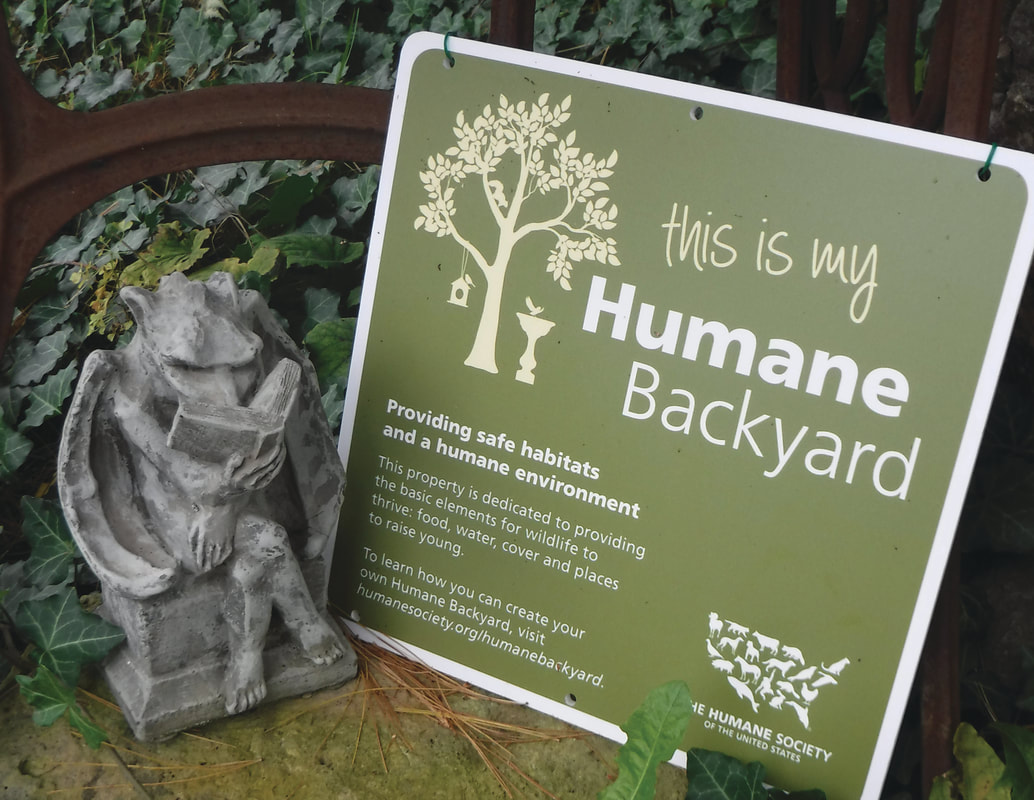
We've registered our yard with both the National Wildlife Federation's Certified Wildlife Habitat program and the Humane Society's Humane Backyard program, both of which include a pledge to reduce or not use any pesticides and herbicides. |
|
3. No Mow May:
If you can keep yourself from mowing all or part of your lawn for the month of May, the dandelions, creeping charlie, or other flowers some consider weeds will feed bees during a period when not much else is in bloom. I’ve read that you can buy signs that say “Excuse the mess, we’re feeding the bees,” to help your neighbors understand what you’re doing. Plus, if you have a riot of dandelions you can make dandelion wine, and there will still be enough leftover to feed the bees. Also, I was surprised to find out, once I actually paid attention, that dandelion flowers are only around for a few weeks in the Spring, so if you don't think they're gorgeous like we do, you don't have to look at them for long.
Click for more info about No Mow May: https://beecityusa.org/welcome-pollinators-to-your-lawn-with-no-mow-may/ https://www.zoosociety.org/Conservation/NoMowMay.php |
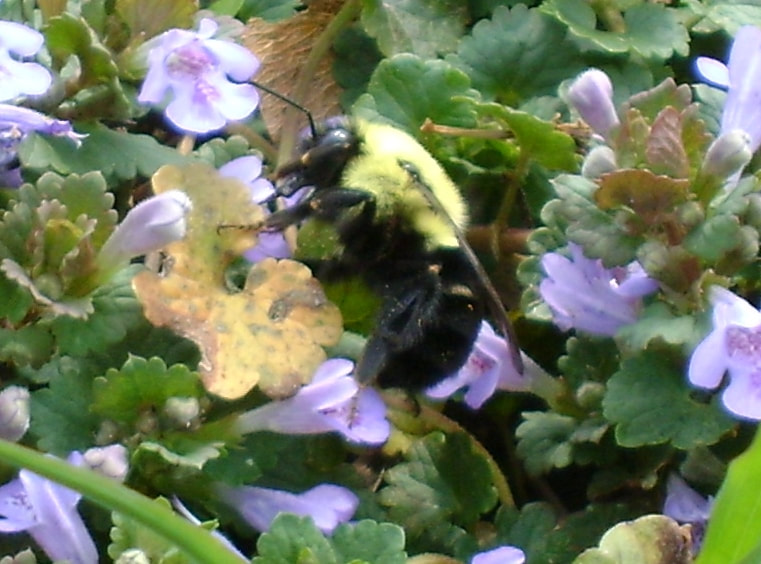
A Queen Common Eastern bumble bee on creeping charlie.
|
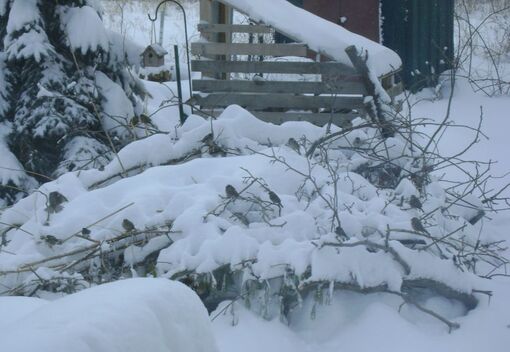
Our brush pile is a favorite spot of many birds all Winter long.
|
4. Learn to love the mess:
Brush piles will often have bare earth underneath them, which bees need for nesting. Vines can be grown over the brush to hide it if you don’t like the look.
Leaf piles provide shelter over the Winter. They can be removed in the Spring (after several days of 50 degree F weather) if you want, although leaving them to decay will also feed the soil. These types of garden habitat may look messy to some, but we’ve learned to see it otherwise. We call our brush pile the “birdie condo” and don’t rake the leaves, which if they fall on plants rather than lawn, look like they belong there. We’ve also found that to look more acceptable, it’s really the paths that matter. If we have nicely defined and well kept paths through the yard, it looks like all the vegetation is on purpose (which it is). |
5. Provide water:
All life needs water, so adding some of it to your yard will help the bees and everyone else. We’ve built a small pond in our yard (see our instructional book), but you can also help without going that far. Simply put a tray out at ground level and put some rocks in it to help any bees or insects reach the water and climb out of it. The separate bottom that comes with pots for houseplants works well for this. You can add water if you want, or just let it collect water whenever it rains.
|
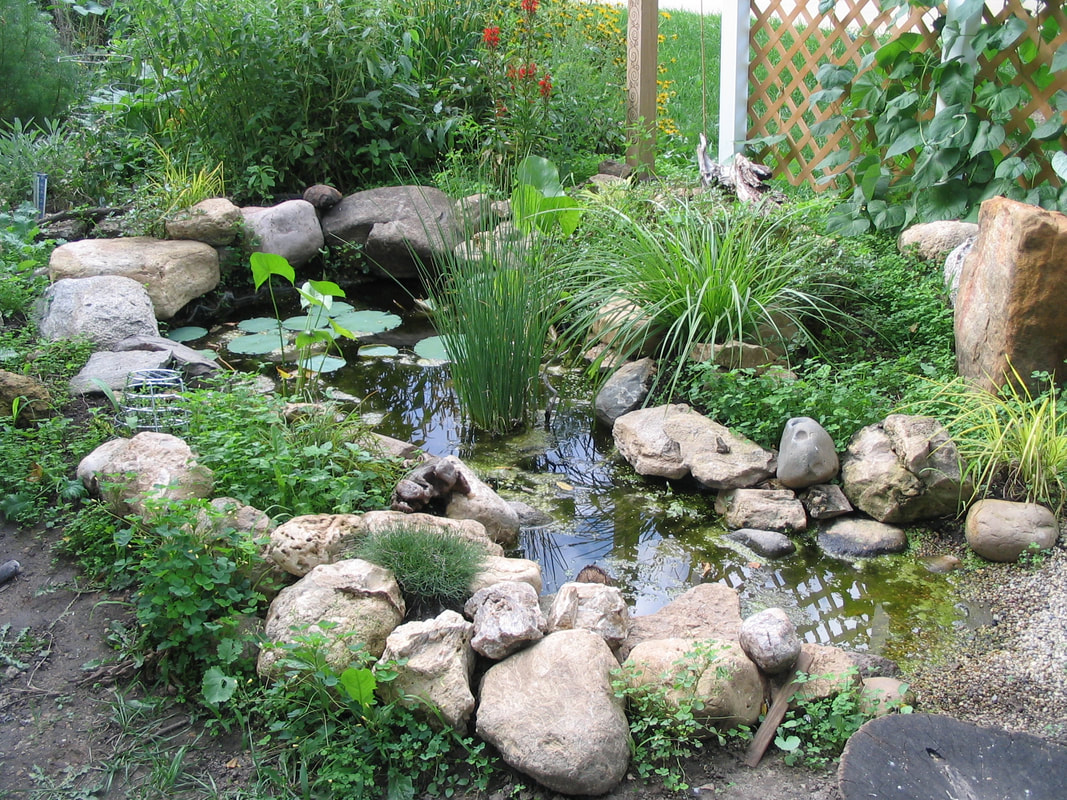
The small pond we built at Our Tiny Homestead has provided us with many hours of enjoyment while supporting all types of life.
|
6. Other ideas and resources:
- For more ideas on how to support all types of wildlife, see our Gardening for Wildlife page.
- Here's 2 page pdf with a great overview of the rusty patched bumble bee from the WI DNR: dnr.wi.gov/topic/endangeredresources/documents/bullyforbees.pdf
- To learn more about bees and how to ID them, Bear has used these resources (more paid links):
|
Bees in Your Backyard is good if you're into the science of identifying all kinds of bees vs. flies and wasps.
|
  |
Bumble Bees of North America is great if you like bumbles. Wisconsin only has 20, but in this book you can learn about a wider variety of bumbles across the country.
|
  |
Together we can help the bees!
Here's a gallery of bees seen in our tiny yard:
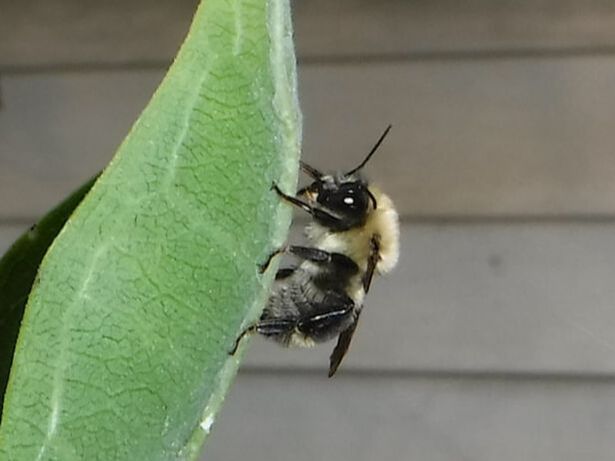
Don't ask me how I got the glamour shot look for this bee. - Bear
|
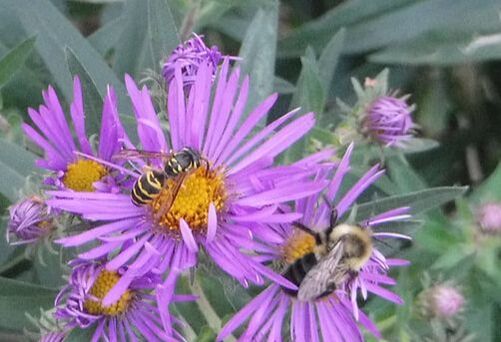
Let's just get along (a wasp and a bumble bee on asters).
|
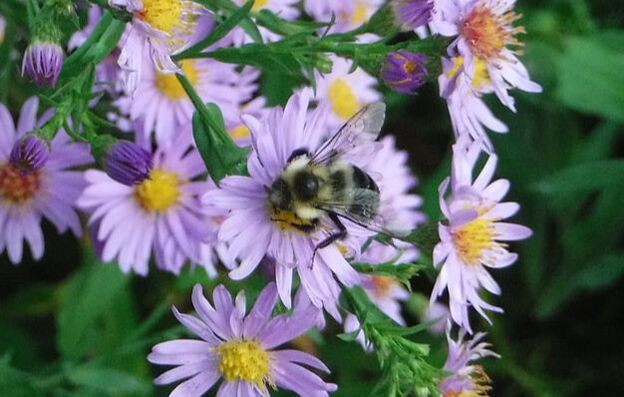
Bumble bee on asters.
|
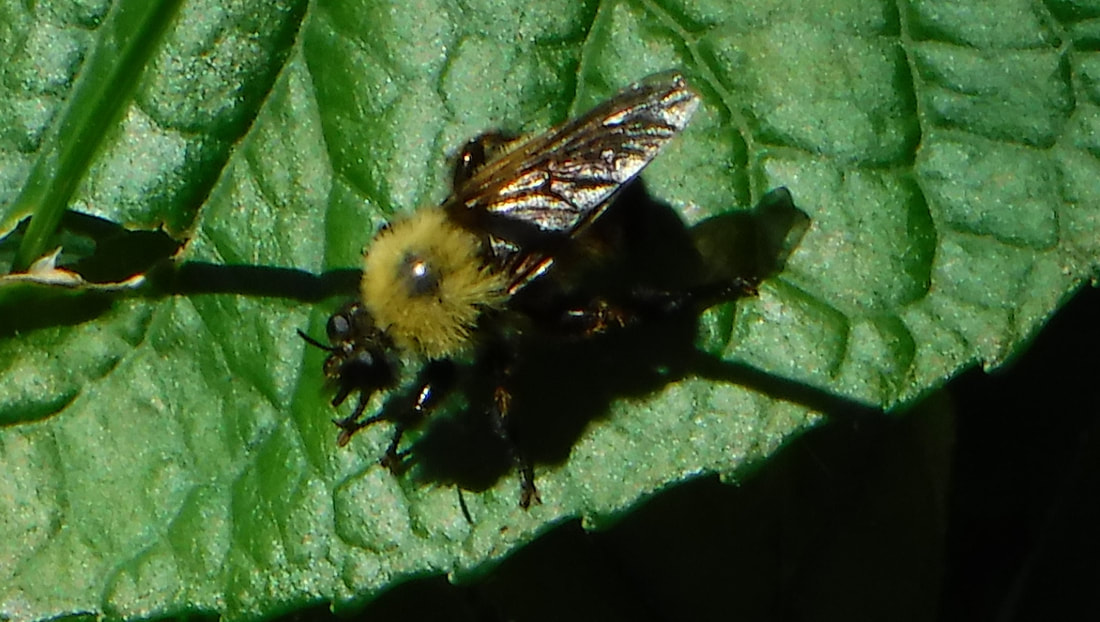
This was the only bee that would stop and pose for Bear one day. But actually, it's a robber fly. See how the head looks more fly-like? Some flies mimic bees for safety, because bees are considered more dangerous.
|
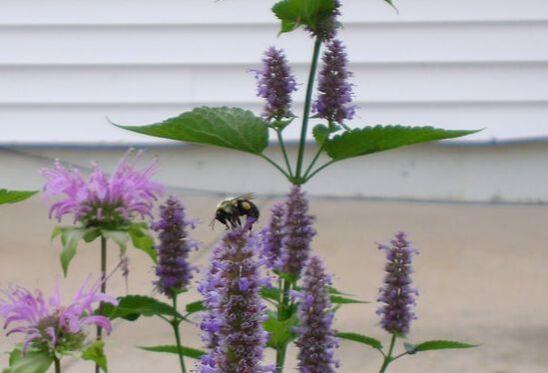
Bee on anise hyssop.
|
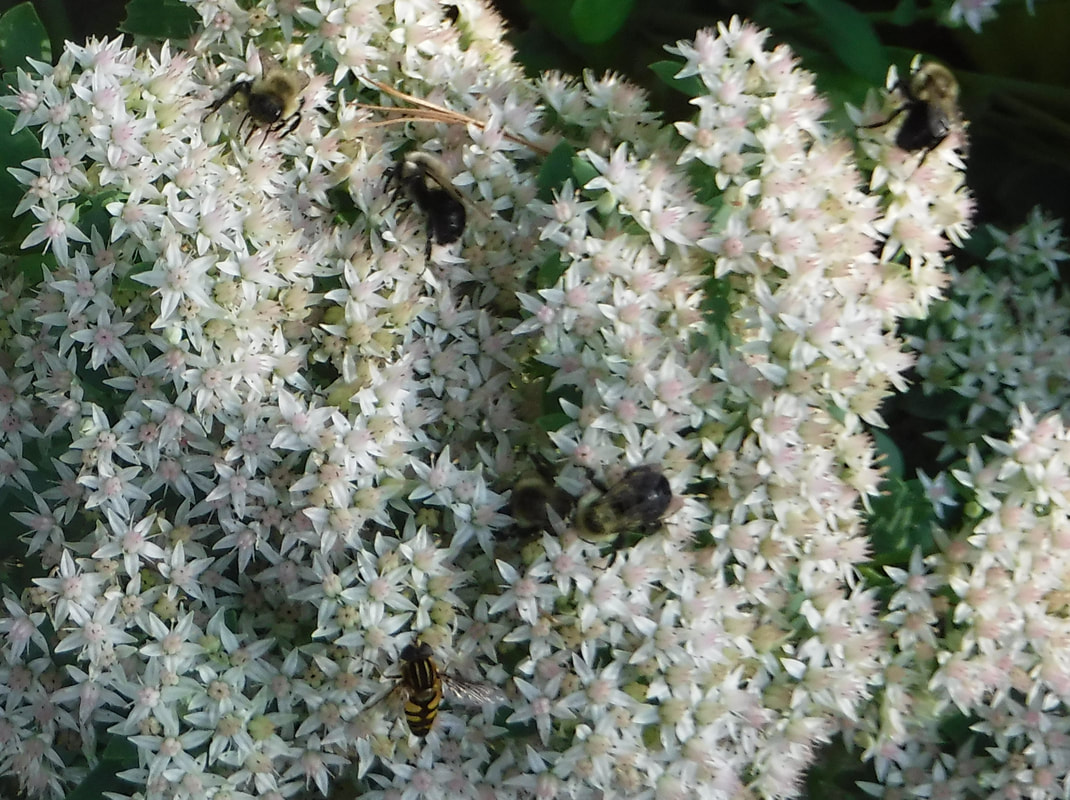
This stonecrop is often covered with dozen of bees at a time. It blooms in the autumn, when not other much food is left.
|
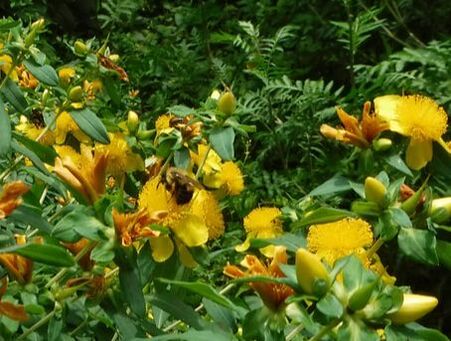
Bumble on St. John's Wort.
|
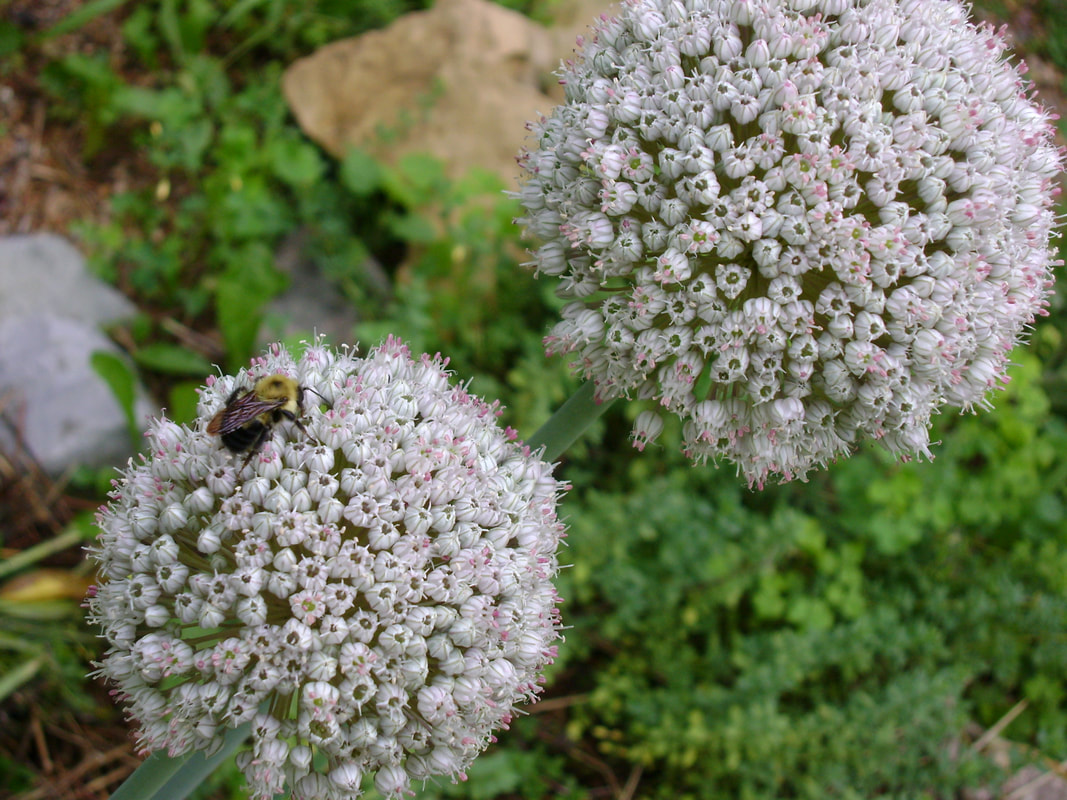
This bee is on an onion that was allowed to go to seed.
|