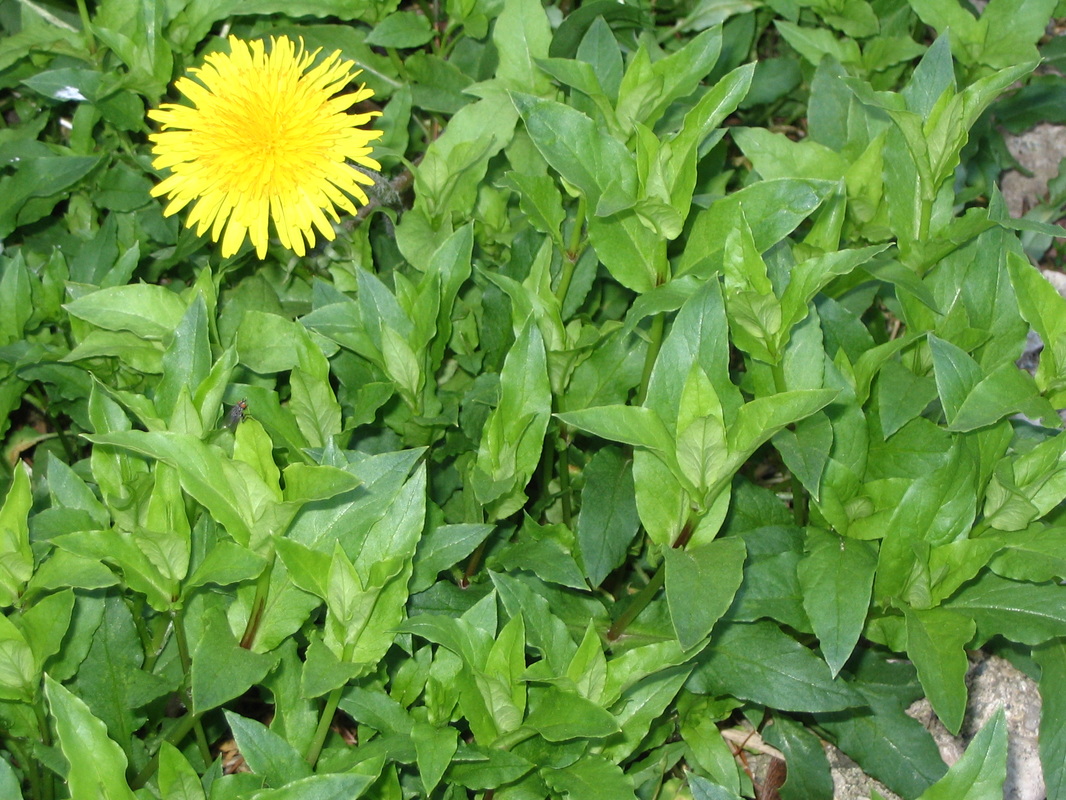
Close up of Spring chickweed growing with a dandelion.
|
EAT YOUR YARD: ChickweedFrom Theresa:
Chickweed is one of my favorite weeds. Apparently most people don't want it growing in their yards, but they must not know they are missing out on an amazing Spring treat. It has a flavor I crave, so my body must realize that it has a lot of nutrition to give me after a long Winter. I first tasted it when I was in my twenties, during a workshop I took on wild edibles, and I didn't forgot how wonderful it was during the intervening 15 years until I had land on which to grow my own food. After we moved into our tiny homestead and started digging up the lawn, it didn't take long for it to volunteer in my yard. I was very satisfied. |
How to Grow Chickweed:
|
|
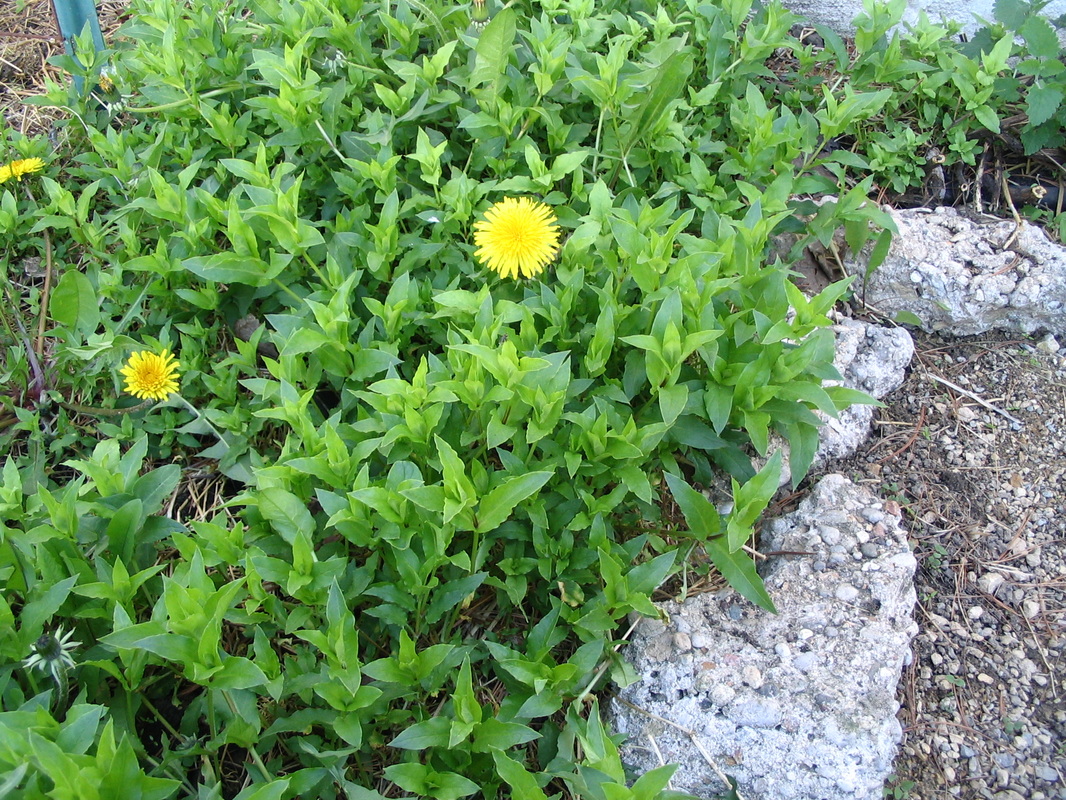
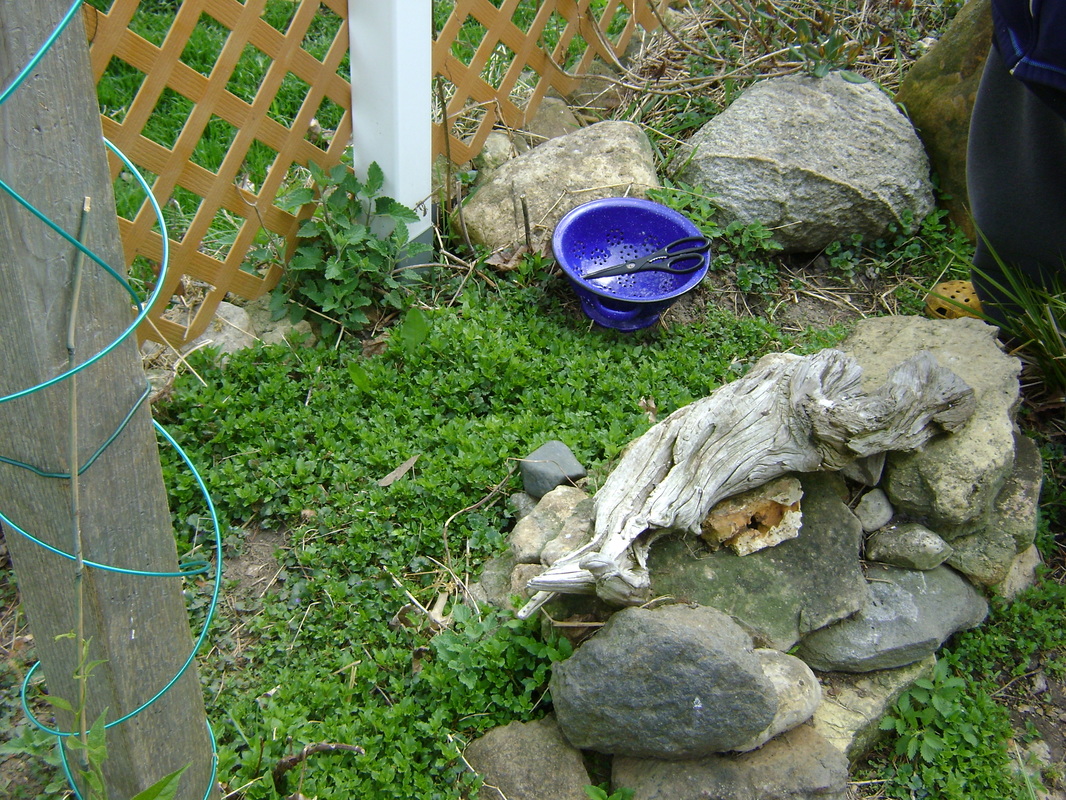
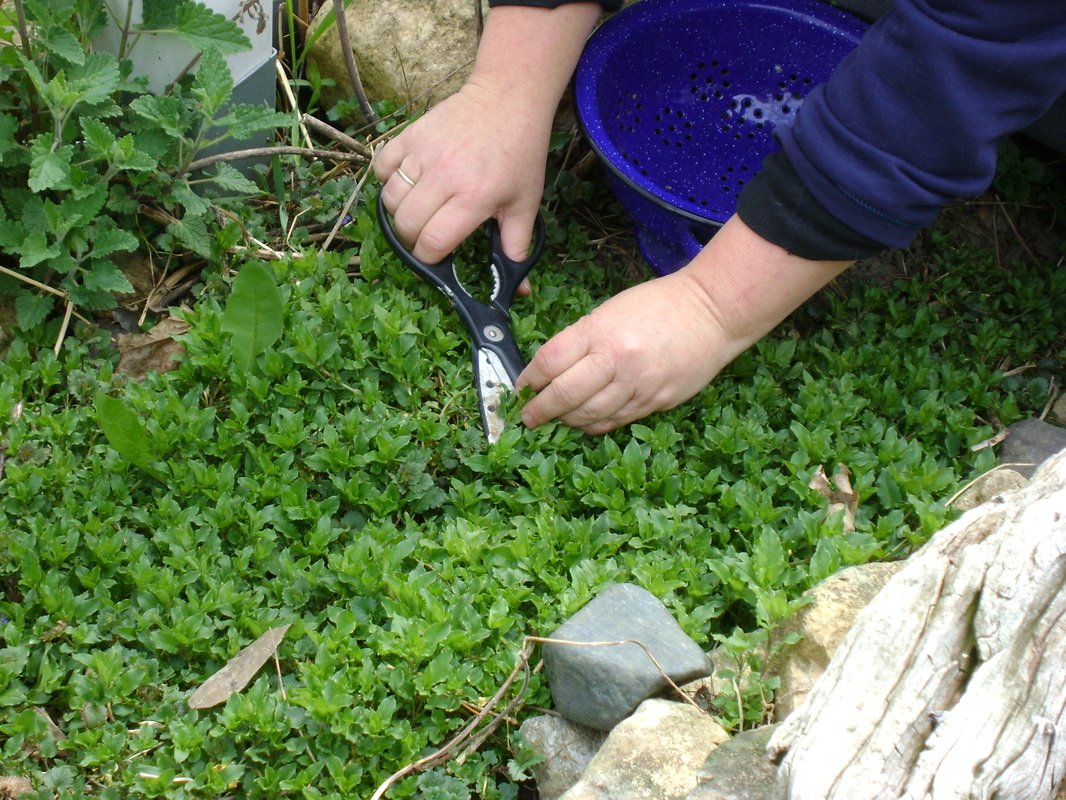
- The photo below shows the chickweed patch that grew behind our pond (in front of and to the left of the blue colander), in the disturbed soil on the path where I unsuccessfully tried to grow clover.
How to Harvest Chickweed:
|
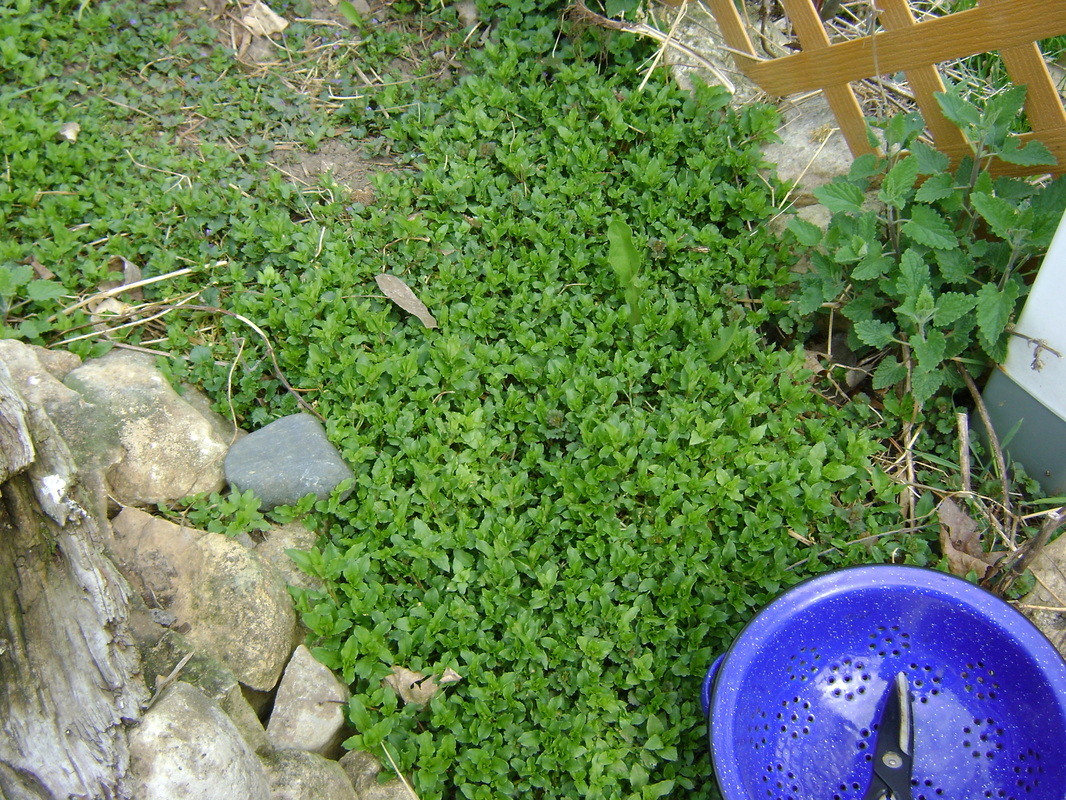
1. The tender leaves and stems of chickweed are very tasty. It is easiest to harvest them in early Spring (late April in our area), while the plant is still short.
|
2. You can harvest chickweed with a pair of scissors. You can cut off the top of an entire patch, and it will grow back.
|
|
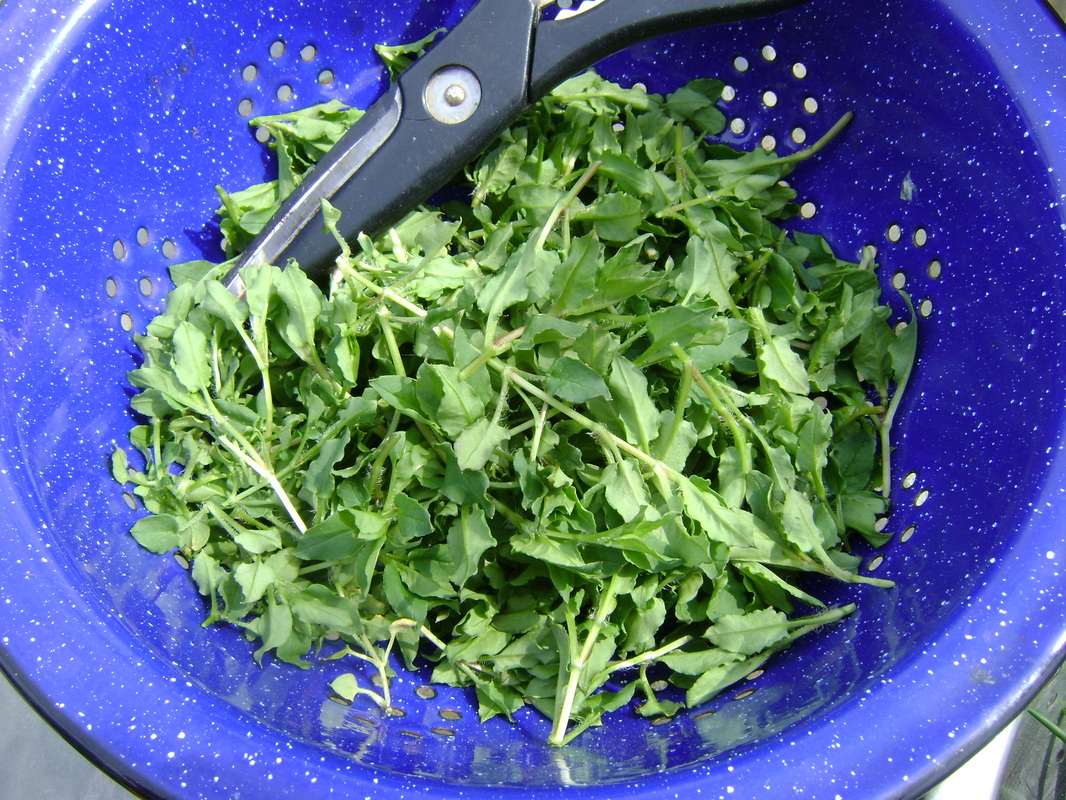
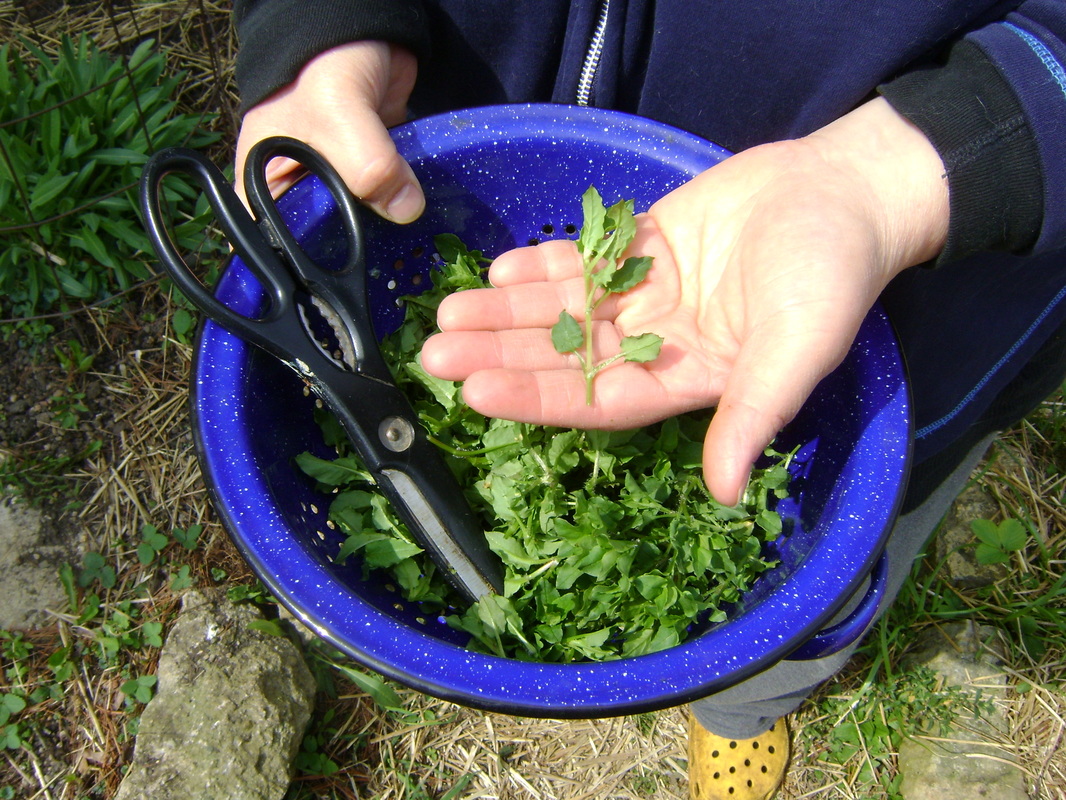
3. Pick a lot- you'll want more.
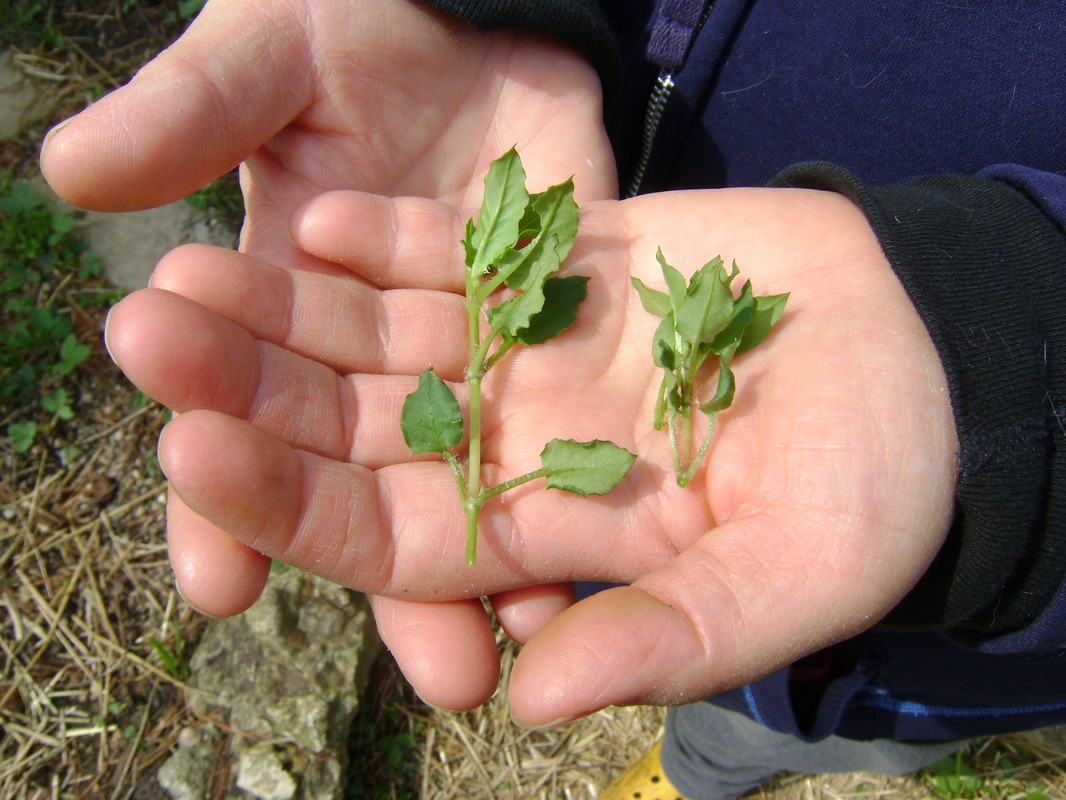
5. In the photo to the right, the chickweed on the left in my hand is starting its growth spurt. It's still edible, but the one on the right is just perfect for eating.
|
4. Once the chickweed gets older, it becomes "leggy." You start to see 1-2" stems between the leaf clusters. The leaves are still edible and tasty at this point, but the stems can get tough, so you have to pull the leaves off the stems to eat them. This is a lot of work, so I usually only eat the younger chickweed.
|
How to Eat Chickweed:
|
|
One "Cooked" Chickweed recipe:
If you don't want to eat your chickweed alone, here's a recipe I developed that still lets you enjoy its great raw taste:
|
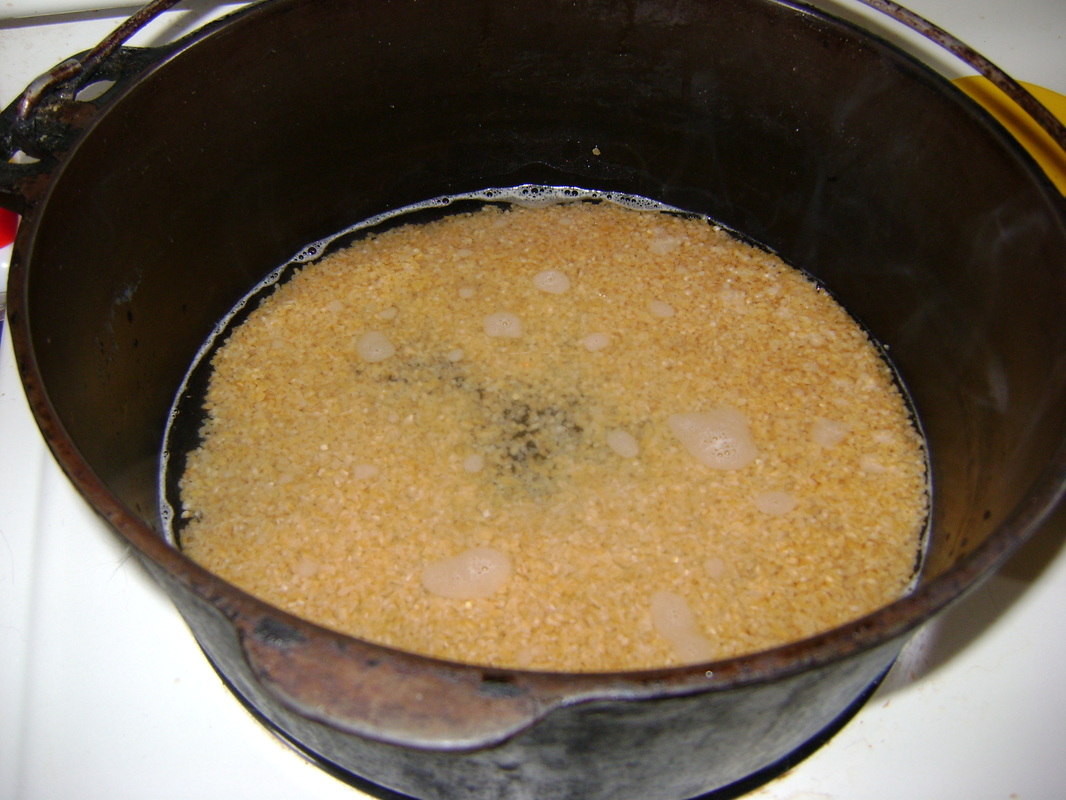
1. Add 1 cup bulghur to 2 cups water, cover, and boil until the water disappears and the bulghur is fluffy and chewy.
|
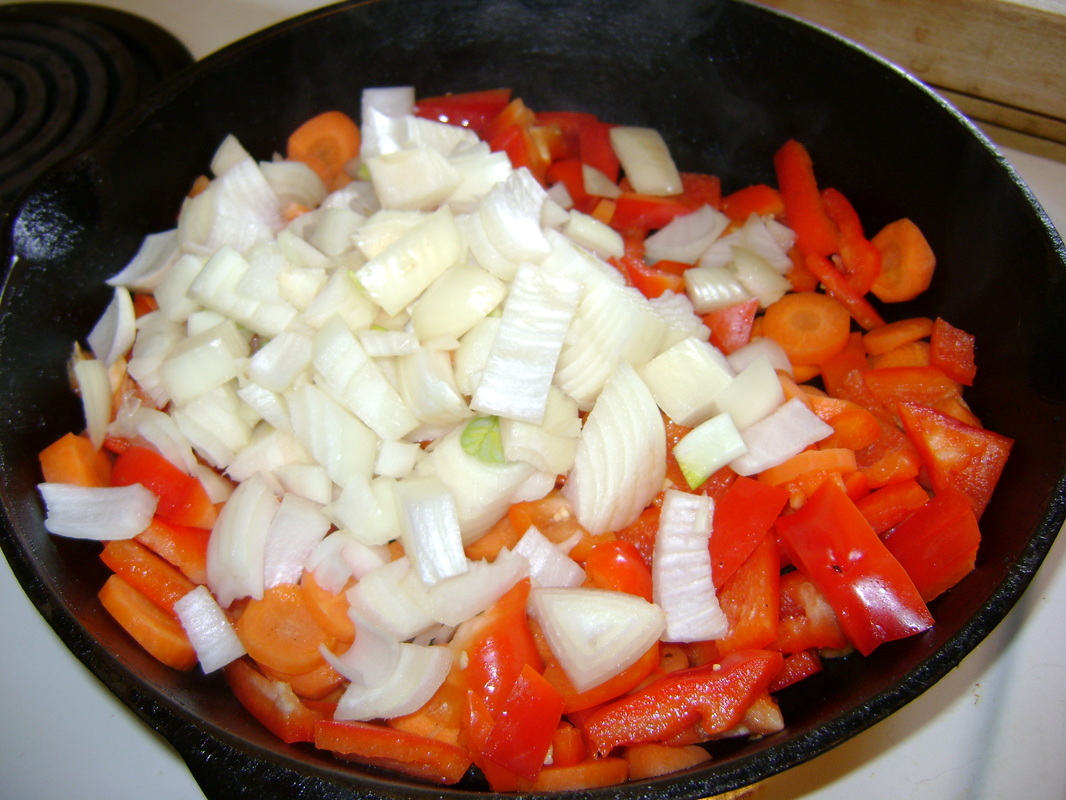
2. In a skillet, saute chopped carrots (from our root cellar), chopped red and/or green peppers (from the freezer), and a chopped storage onion.
|
|
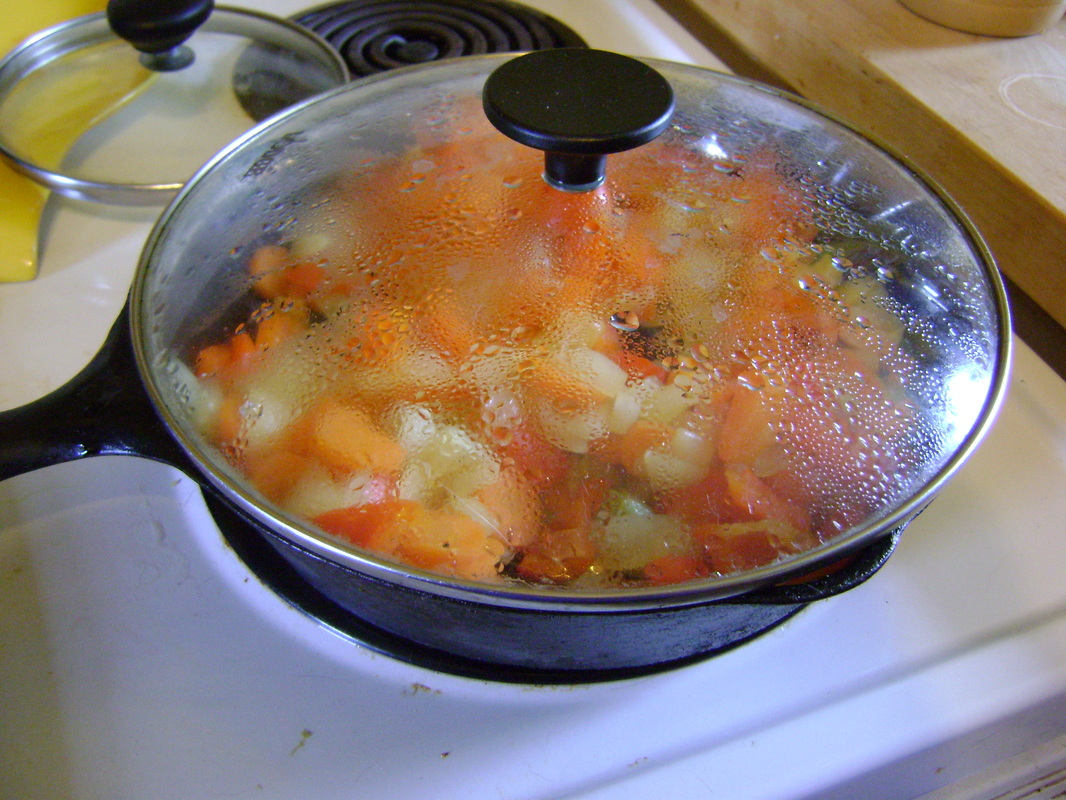
3. Cover the vegetables and cook, stirring occasionally, until the carrots are soft, about 20 minutes.
|
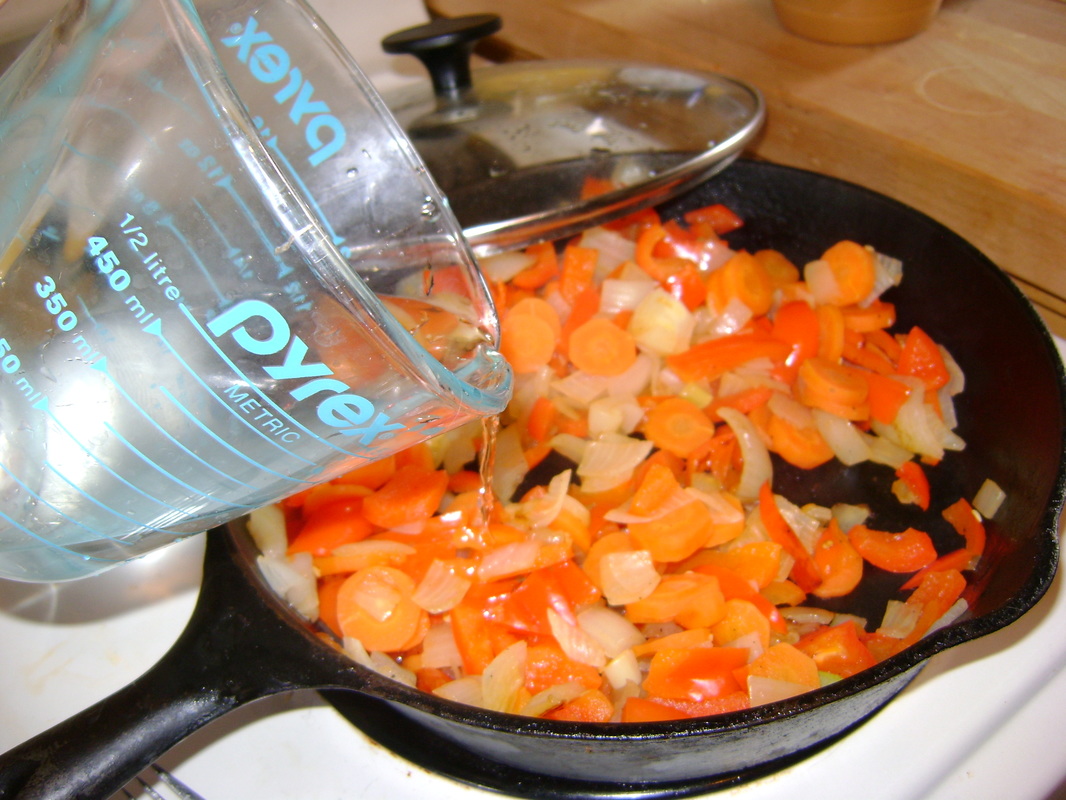
4. If the veggies start to stick, add a little water to cover the bottom of the pan.
|
|
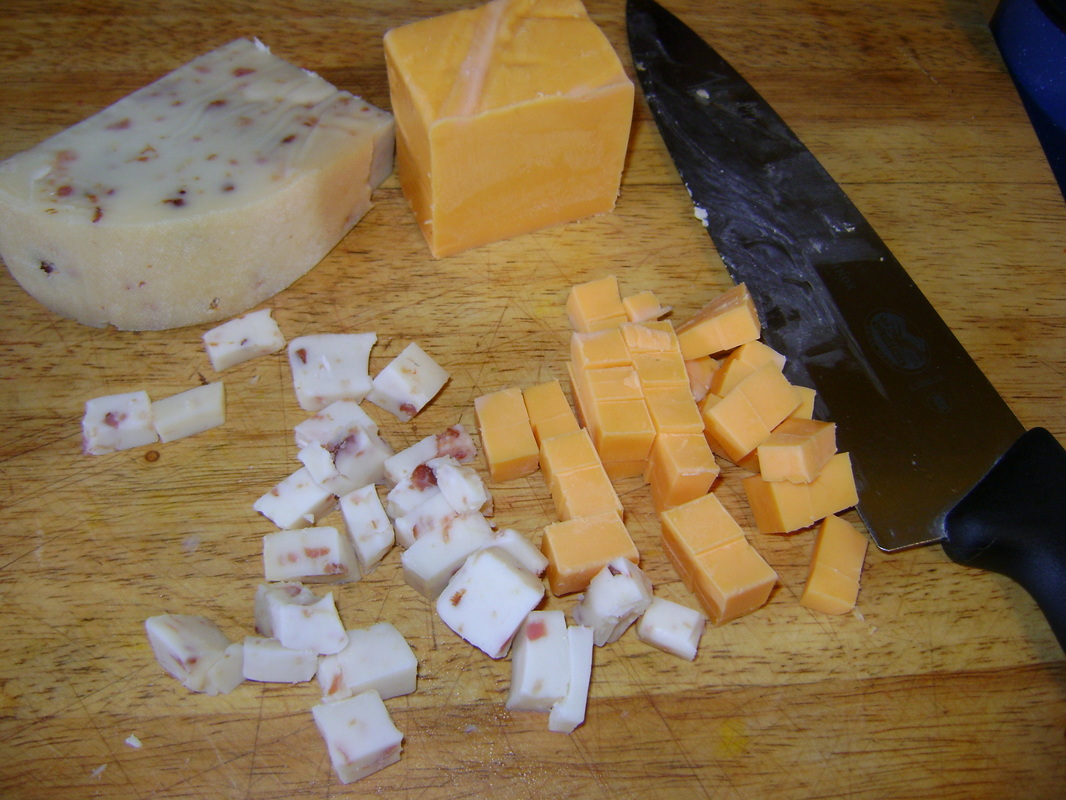
5. Chop cheese into chunks. Here I've chopped a bacon gouda on the left and a cheddar on the right. Use whatever cheese you think will taste good or whatever you have on hand.
|
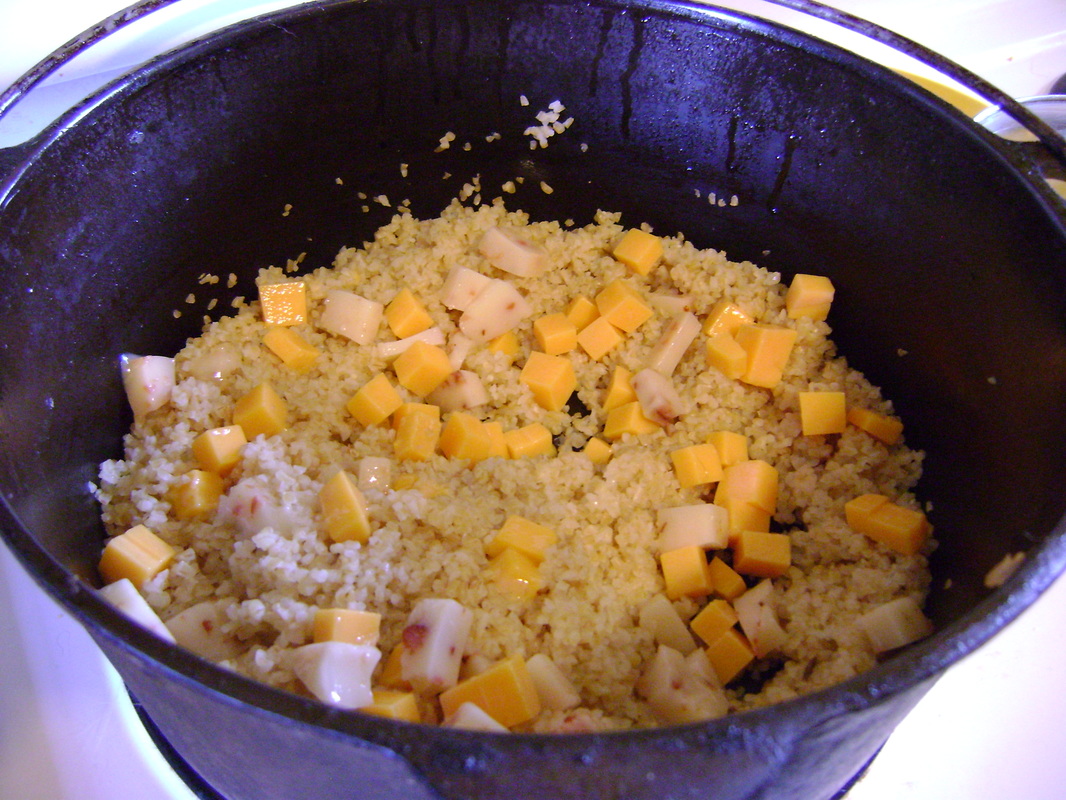
6. When the bulghur is done cooking, stir it a bit, then add the cheese while it's still warm. Don't stir in the cheese chunks yet, though. Add the lid and let the chunks melt a bit.
|
|
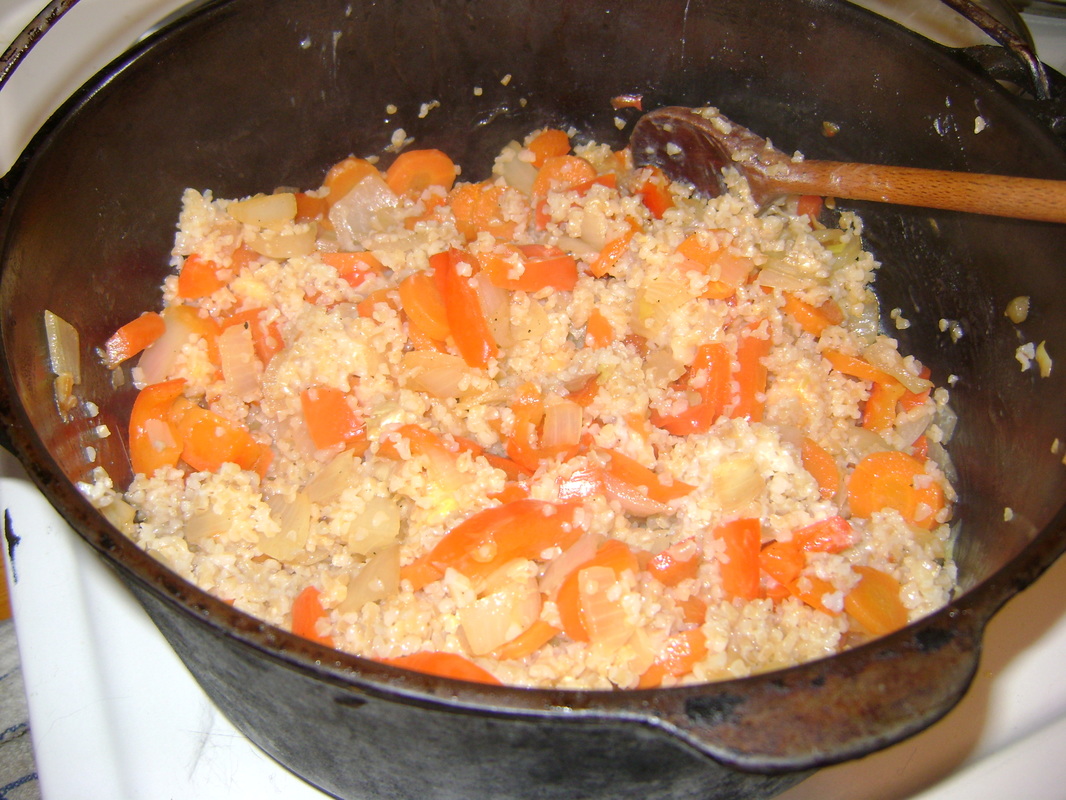
7. When the carrots are done, stir the vegetables into the bulghur and cheese...
|
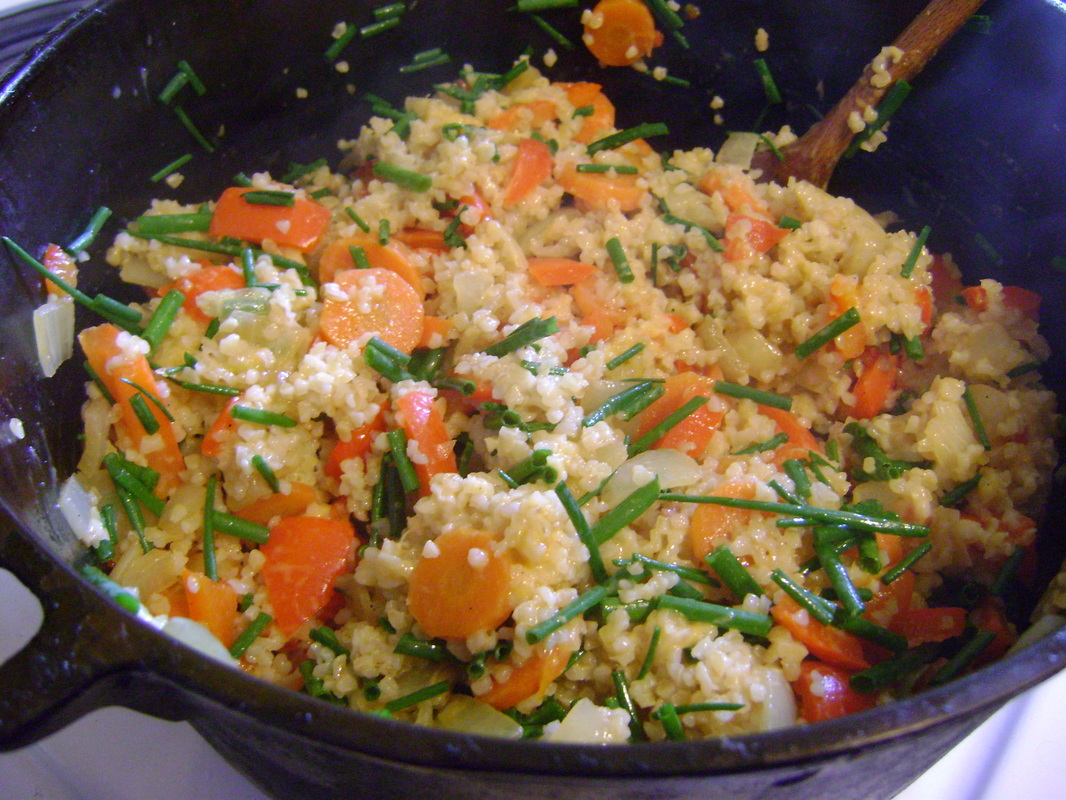
8. Add chopped chives if you have them...
|
|
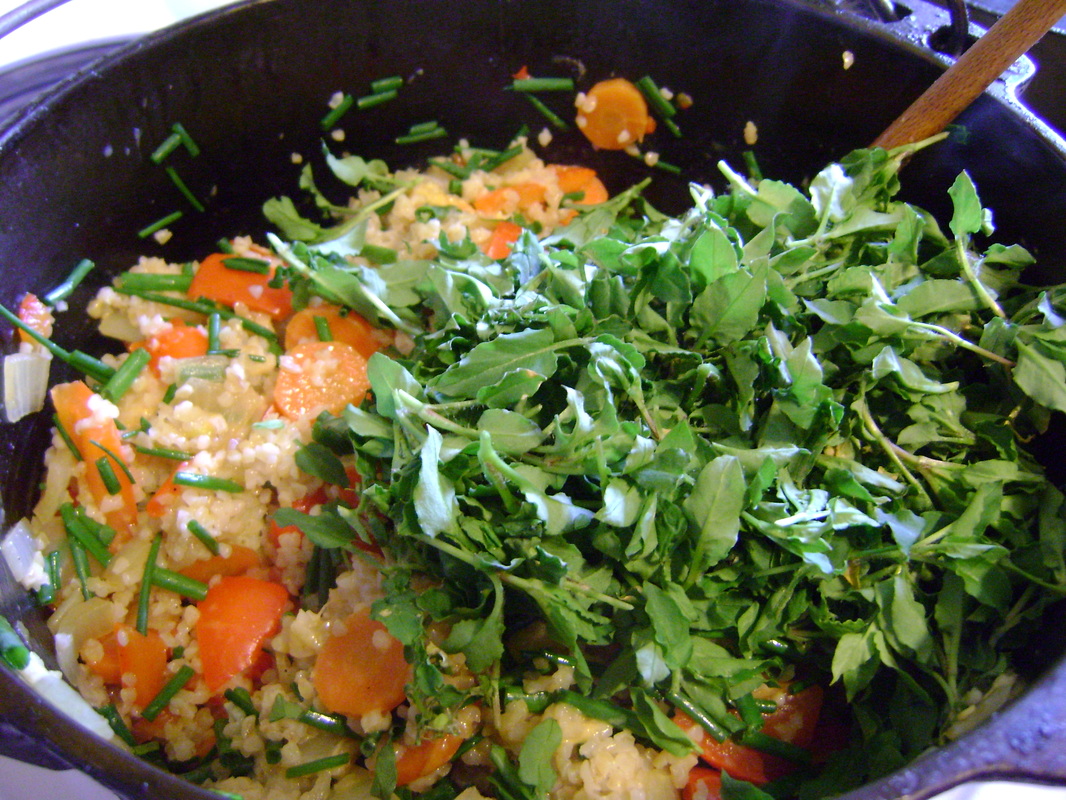
9. Add the raw chickweed...
|
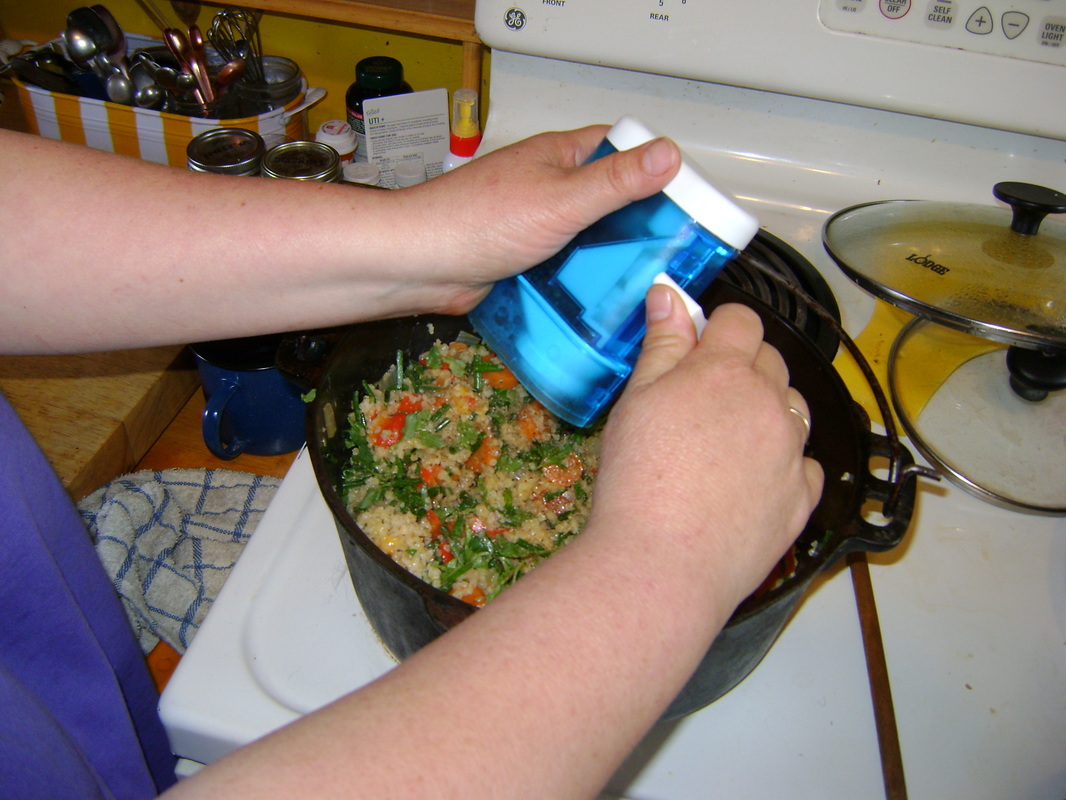
10. ...and lots of grated pepper.
|
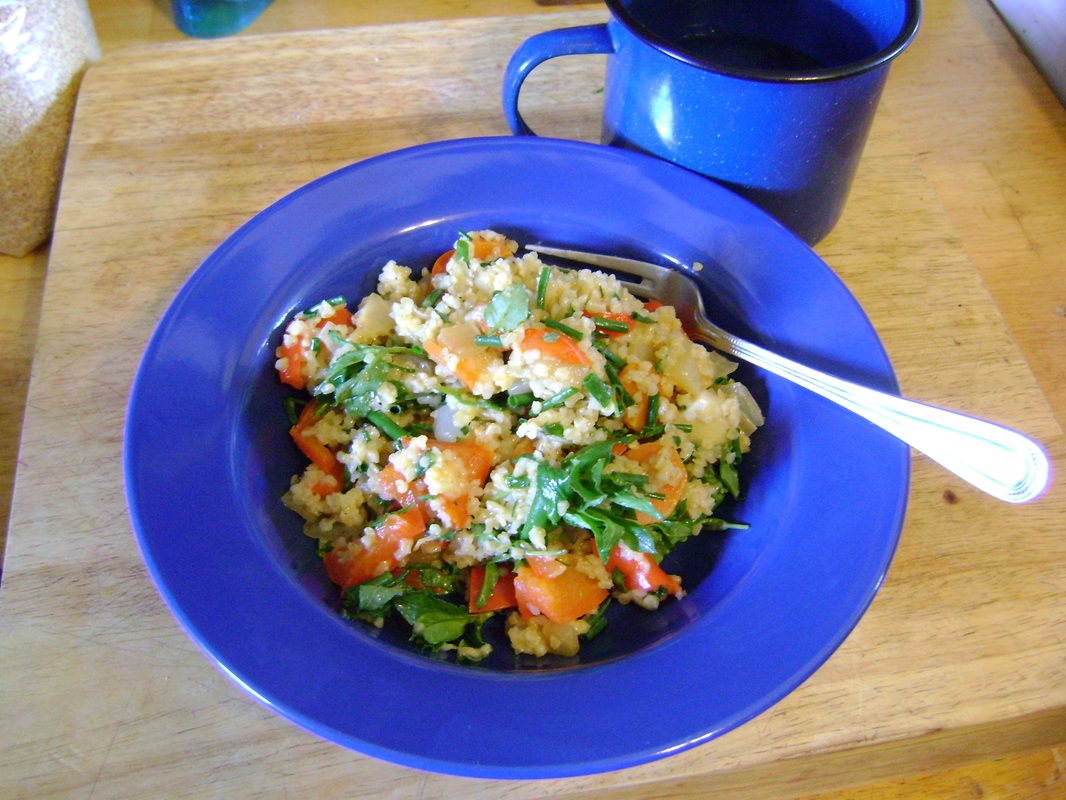
11. Enjoy!
It's best if you have enough chickweed to taste some in every bite.
It's best if you have enough chickweed to taste some in every bite.
Why is Chickweed so Good for Us?
- Chickweed is also used medicinally. If you'd like to learn more about this, the best reference I've found is Susan S. Weed's book, Wise Woman Herbal: Healing Wise, which also has chapters devoted to many other nutritional weeds, such as nettle, burdock, and wild voilets.
- Susan describes chickweed as a nourishing, strengthening food, because it contains so many vitamins and minerals, such as Vitamin A and C, calcium, potassium, magnesium, and zinc.
- Her book includes many chickweed recipes, such as chickweed pesto and chickweed tabouli. She also believes it's most beneficial when eated raw.